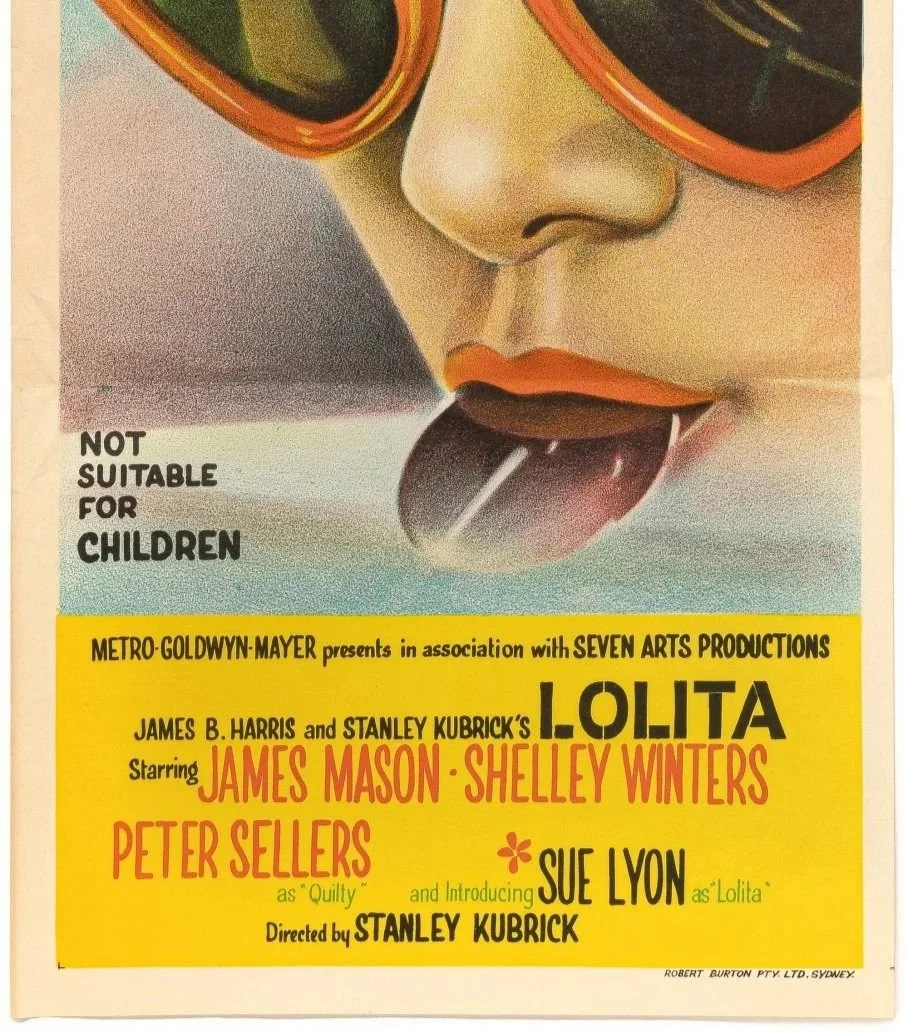
Reading Lolita: An Interpretive Puzzle
Marianne Janack
The novel Lolita begins with an introduction from John Ray Jr., Ph.D., who explains that the account that follows of Humbert Humbert’s pursuit of a girl named Dolores—whom he refers to as Lolita—and his subsequent pursuit of an even worse character by the name of Clare Quilty has come to him from Humbert’s attorney. Humbert’s attorney is also a relative of John Ray’s, and has asked Ray to edit the manuscript. In explaining how he’s been chosen, Ray says (in a faux modest tone) that it is probably because he has recently been awarded a prize for a published account of morbid states and perversions. Its title is “Lolita, or the Confession of a Widowed White Male”. Ray’s foreword ends with this passage:
As a case history, “Lolita” will become, no doubt, a classic in psychiatric circles. As a work of art, it transcends its expiatory aspects; and still more important to us than scientific significance and literary worth is the ethical impact the book should have on the serious reader; for in this poignant personal study there lurks a general lesson; the wayward child’ the egoistic mother, the panting maniac—these are not only vivid characters in a unique story: they warn us of dangerous trends; they point out potent evils. “Lolita” should make us all—parents, social workers, educators—apply ourselves with still greater vigilance and vision to the task of bringing up a better generation in a safer world.
A morality tale! So maybe it can be used for good? And yet, we find, Humbert Humbert’s story seems to draw on the tropes of narratives of blamelessness. While he had a normal childhood, with a father who read him some of the great romantic novels—Don Quixote and Les Miserables--he has been in search of a replacement for his first love, who died tragically when she was 12 or 13 of typhus. Her name was Annabel, and Humbert Humbert says that “in a certain magic and fateful way, Lolita began with Annabel.”
So Lolita is a document that Ray and Humbert Humbert say should be read as a confession, but also as an explanation, a way of rationalizing his crimes: pedophilia and murder. But the name Humbert Humbert is itself an odd one. It suggests the French ‘ombre’ (shadow) and the fact that the author of the confession has named himself Humbert Humbert and that the person he has pursued and killed is Clare Quilty (clearly guilty?) seems to point both to the detective story model and the Doppelgänger story: the idea of an alter ego, a psychological conflict, or insanity.
So we have an author who gives himself a name that suggests he is a shadow, but who thinks that he is not as bad as the person he kills (Clare Quilty, who kidnaps Lolita/Dolores); he has written a confession that is also a form of excuse: my pedophilia has a psychological basis; my murder was of a person worse than me. But, of course, the writing is beautiful, and Humbert’s story of his pursuit of Lolita and killing of Quilty is framed as a great romantic story. “You can always tell a murderer by a fancy prose style,” Humbert tells his audience.
If you’ve seen the Stanley Kubrick movie of the book you might think that I’ve missed a basic element of the story: Lolita is a temptress, who lures Humbert Humbert into a romantic relationship. And Humbert Humbert suggests this, too. But the careful reader will wonder if this interpretation of Dolores is a good one, or if it is more an artifact of H.H.’s wishes and desires—and maybe that is all the access we have to others. Indeed, maybe that is how all acts of interpretation go—whether it’s self-interpretation or, in the case of John Ray, Ph.D., an interpretation that is meant to teach a lesson. The detective story and Doppelgänger story turn out to be mirrors, that can show us how we read.