Introduced by Marianne Janack, Editor-in-Chief
When I told a friend of mine that students in my David Foster Wallace and Metaphilosophy seminar read “A Supposedly Fun Thing I’ll Never Do Again” she told me that she refused to use that story in a class. “He’s such a snob,” she said. “All those people who probably scrimped and saved so that they could afford that luxury cruise, and he just shits on them.” Many students have had a similar response over the years
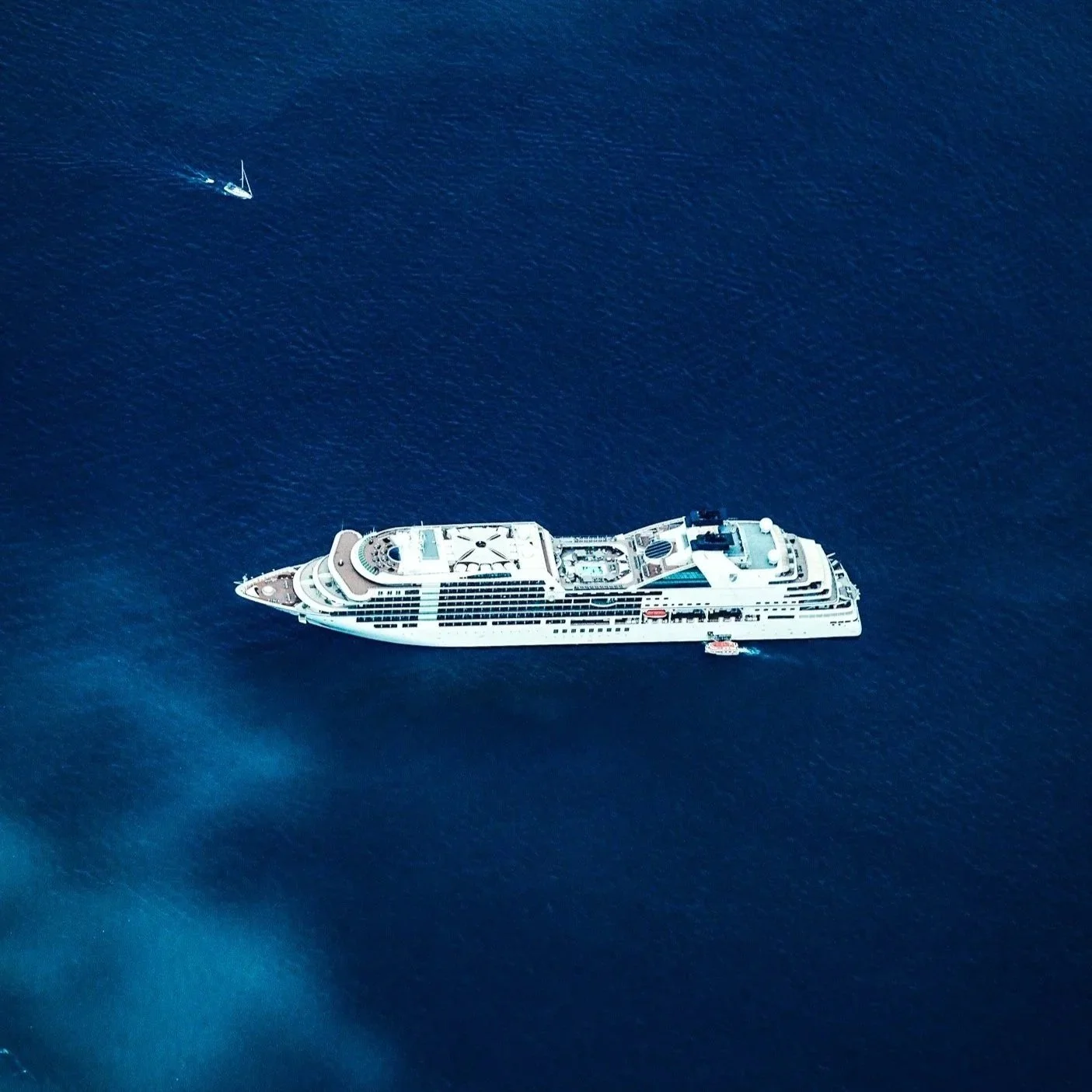
“A Supposedly Fun Thing…” was originally published in Harper’s Magazine in 1996 as “Shipping Out: On the (nearly lethal) comforts of a luxury cruise THE FOUR-COLOR BROCHURE, PART I” and republished as part of Wallace’s nonfiction collection A Supposedly Fun Thing I’ll Never Do Again: Essays and Arguments. The essay is an account of Wallace’s luxury Caribbean cruise framed as a story that undermines the sales brochure written by a fellow creative writer.
Wallace’s account begins in classic literary style, but with a twist:
I have now seen sucrose beaches and water a very bright blue. I have seen an all-red leisure suit with flared lapels. I have smelled suntan lotion spread over 2,100 pounds of hot flesh. I have been addressed as "Mon" in three different nations. I have seen 500 upscale' Americans dance the Electric Slide. I have seen sunsets that looked computer-enhanced. I have (very briefly) joined a conga line.
The essay is about tourism, about leisure, about pampering (Wallace makes much of the double entendre), and about larger things: death, pleasure, and how people distract themselves from the former by finding pleasure in packaged entertainment. Megan Garber, writing about the essay, says that in the hands of another writer, the essay would have been much blander. Wallace, she says, is a philosopher with a writer’s imagination. But maybe a blander essay might have seemed nicer. Being critical and snobbish isn’t nice.
My friend is right: the essay is sort of mean. And it’s easy to read it and think about how we, the readers, are superior to the pampered clientele who have embarked on this vacation in a floating city where all their needs are met. But as our invited contributors show, looking critically at what is taken for granted by most people is what philosophers do—an occupational hazard, as Socrates learned.
Plato’s Republic is usually taken to be an extended examination of democracy, including a discussion of the role of art in the ideal city. Art can be pleasant and entertaining, the discussants agree, but can it do the work of teaching people about the Good and the True? Wallace’s story about his experience and his eye for the ways in which entertainment and the pursuit of pleasure have become intertwined with democratic ideals could have been presented as an argument. But instead, it gives us an account of the people on the cruise, the way the cruise is marketed to people, and the perspective of an outsider who uses that to look critically at what everyone else takes for granted—but we get there through meditations on death and Moby Dick, descriptions of the boat, accounts of the pastimes and entertainment available on the cruise ship, and Wallace’s slapstick humor.
Our contributors give us new ways to read this personal essay—behind the meanness is the critical eye of the outsider, someone who sees not just sucrose beaches and bright blue water, Caribbean tourist sites and people relaxing, but a whole industry built on an idea of freedom and fun that maybe makes the tourist too comfortable.
Nick Hollander is a recent graduate from Hamilton College and currently resides in his hometown outside Atlanta. Despite their contradictions, he is both an aspiring writer and professional political operative
Chris Bousquet is a Visiting Assistant Professor in the philosophy department at College of the Holy Cross. His work focuses on ethics, social and political philosophy, and philosophy of technology.
Madeleine Adams is a writer in Brooklyn.
Emma Reynolds (she/ her) is a Maine-based writer and real estate agent. She teaches creative writing workshops at libraries, bookstores, and breweries. She loves absurdly long sentences and absurdly short footnotes.
Dave Reynolds has been teaching English for over three decades. His first book of haiku, Coming Storm, was published in 2024. He loves nordic skiing, hiking, and cooking.
Gabrielle Brihn is a Master's student in Philosophy at Colorado State University who graduated from Hamilton College in 2026. Outside of writing and philosophy, she enjoys running, baking, and hiking.